1986 – 1988
DEVA Vakschool Almelo
(illustratieve vormgeving)
DEVA Vakschool Almelo
(illustratieve vormgeving)
1990 - 1995
AKI Academie voor beeldende kunst Enschede
(schilderen en tekenen)
AKI Academie voor beeldende kunst Enschede
(schilderen en tekenen)
1995 – 1996
Pedagogisch Technisch Hogeschool Zwolle
(2e graads lerarenopleiding)
Pedagogisch Technisch Hogeschool Zwolle
(2e graads lerarenopleiding)
CV: 1995 -1997 docent grafiek
1997 -2002 dessinontwerper Texoprint.
2002 -2005 hoofd design Novo-Wallco.
2005 - 2020 zelfstandig ontwerper/colorist
2020 - kunstschilder
1995 -AKI groepstentoonstelling
Broerenkerk Zwolle
1996 - solotentoonstelling galerie Ferdinand, Kampen
december 2024 - groepstentoonstelling kunstruimte Concordia, Enschede.
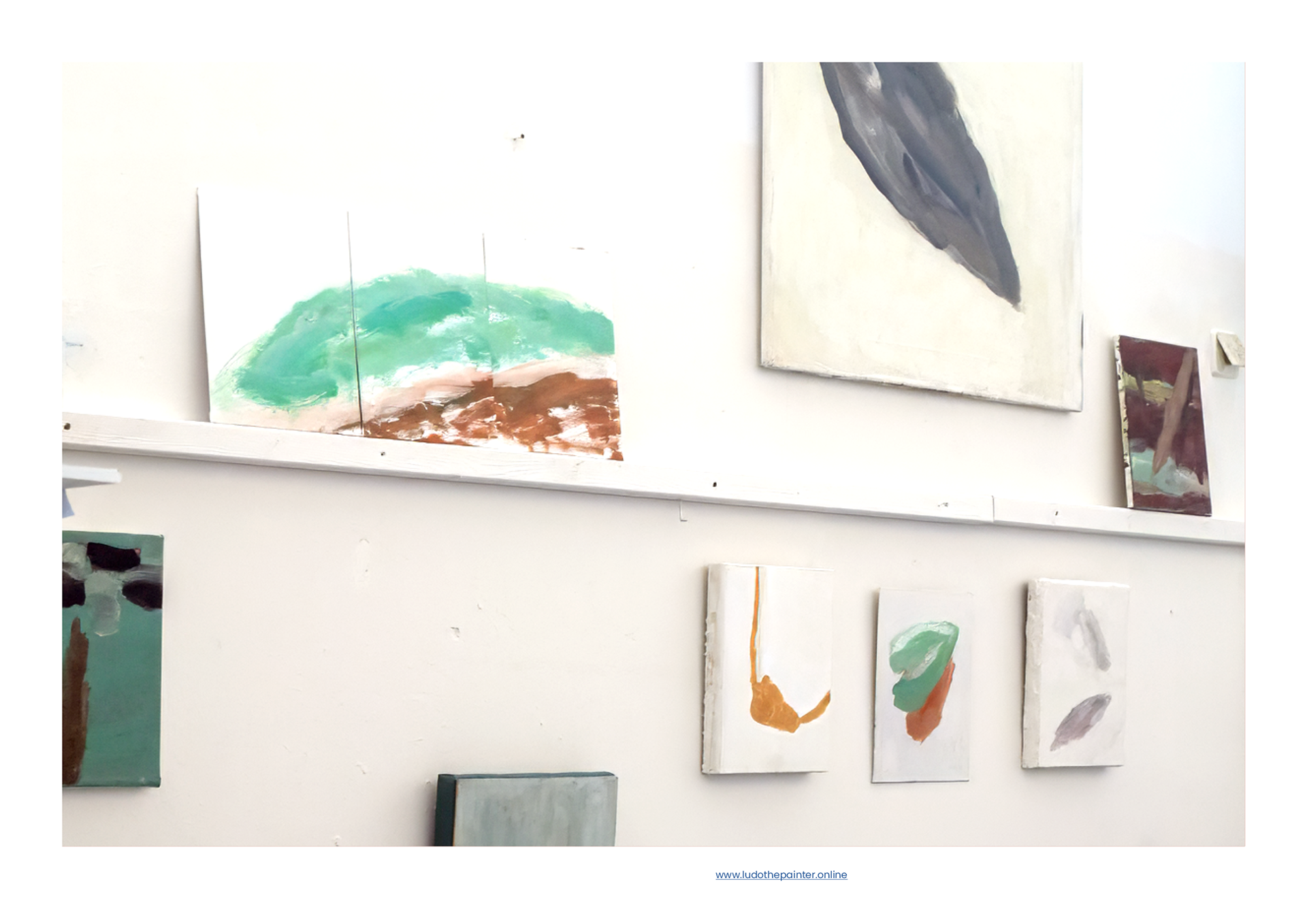
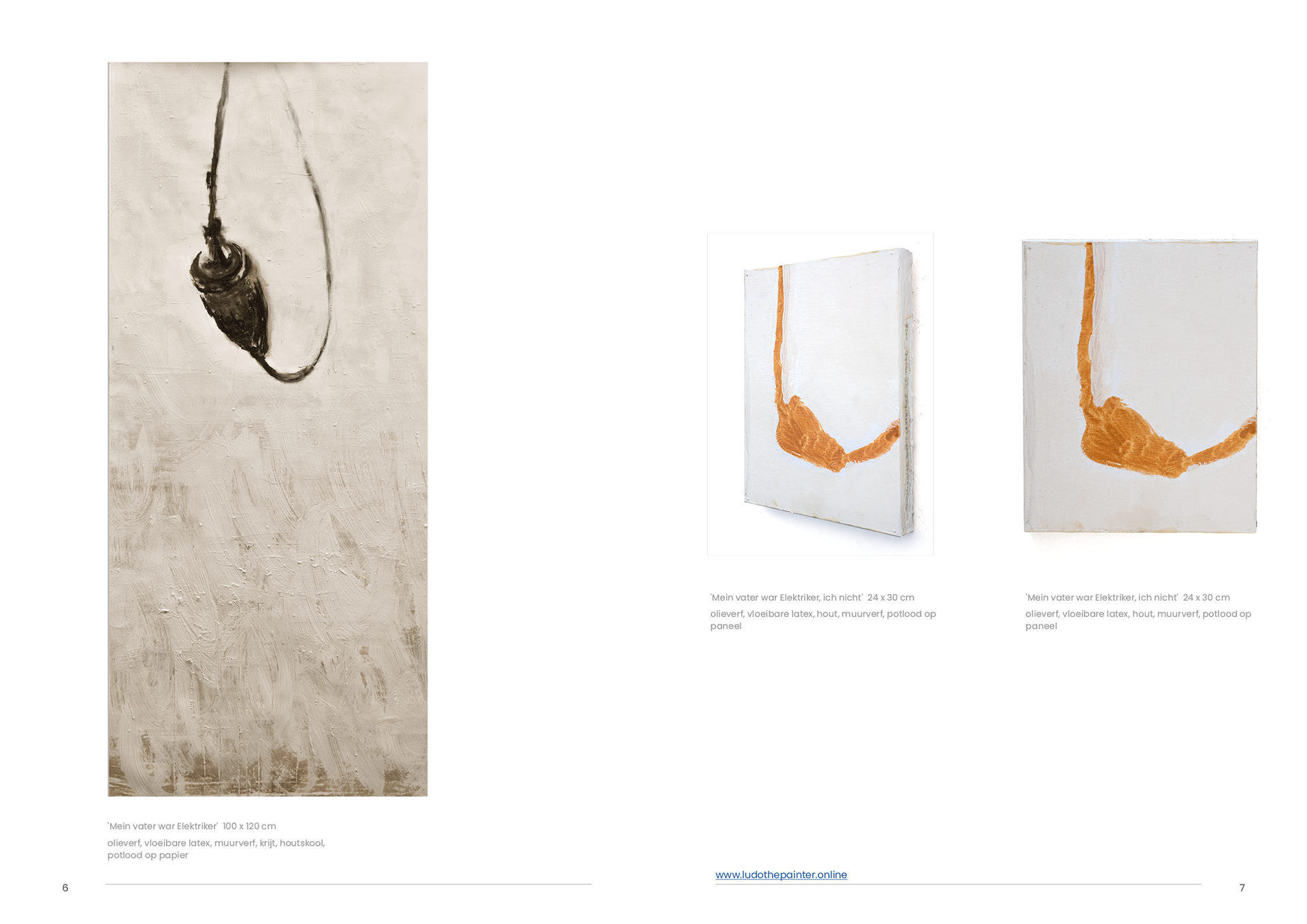
mei - juni 2026 - 'Mein Vater war Elektriker
Concordia053 Kunstruimte - Kunstnonstop
Het lijkt erop dat mijn werk erop gericht is om in het uiteindelijke resultaat een zekere mate van twijfel te laten bestaan. Ik zeg bewust ‘het lijkt’ en ‘mijn werk beoogt twijfel te creëren’, alsof dat buiten mijzelf om ontstaat.
In zekere zin is dat ook zo. Of dat werkelijk zo is, valt zelfs te betwijfelen — en dat doe ik dan ook. Voor mij lijkt het in ieder geval zo.
Hoe het op de kijker overkomt, daar heb ik werkelijk geen flauw idee van.
In zekere zin is dat ook zo. Of dat werkelijk zo is, valt zelfs te betwijfelen — en dat doe ik dan ook. Voor mij lijkt het in ieder geval zo.
Hoe het op de kijker overkomt, daar heb ik werkelijk geen flauw idee van.
Die twijfel is er overigens niet tijdens het maken. Hoe iets tot stand komt, kan ik me vaak achteraf niet meer herinneren of reconstrueren. Als ik terugkijk naar het ontstaansproces van een werk dat uiteindelijk overblijft — veel wordt immers weer overschilderd — kan ik er vaak niet meer mijn vinger op leggen hoe het precies tot stand is gekomen. Ik weet alleen wanneer iets goed is en wanneer niet.
In die zin is het proces belangrijker dan het eindresultaat. Het eindresultaat verraadt alleen of ik consciëntieus te werk ben gegaan. Consciëntieus in de zin van gewetensvol en zorgvuldig.
De aanleiding om een nieuw werk te maken komt puur voort uit een grote mate van nieuwsgierigheid. Dat experimenteren levert af en toe iets op waar ik mee verder kan, maar veel vaker ook niet.
Het gevolg is een lang proces van bijsturen, overschilderen, kijken en nog eens overschilderen. Ik geloof dat het experimenteren, het zoeken naar iets dat er nog niet is, het enige werkelijk nuttige is van het maken van kunst. Althans, wat mij betreft in de schilderkunst. En daarmee spreek ik alleen voor mezelf.
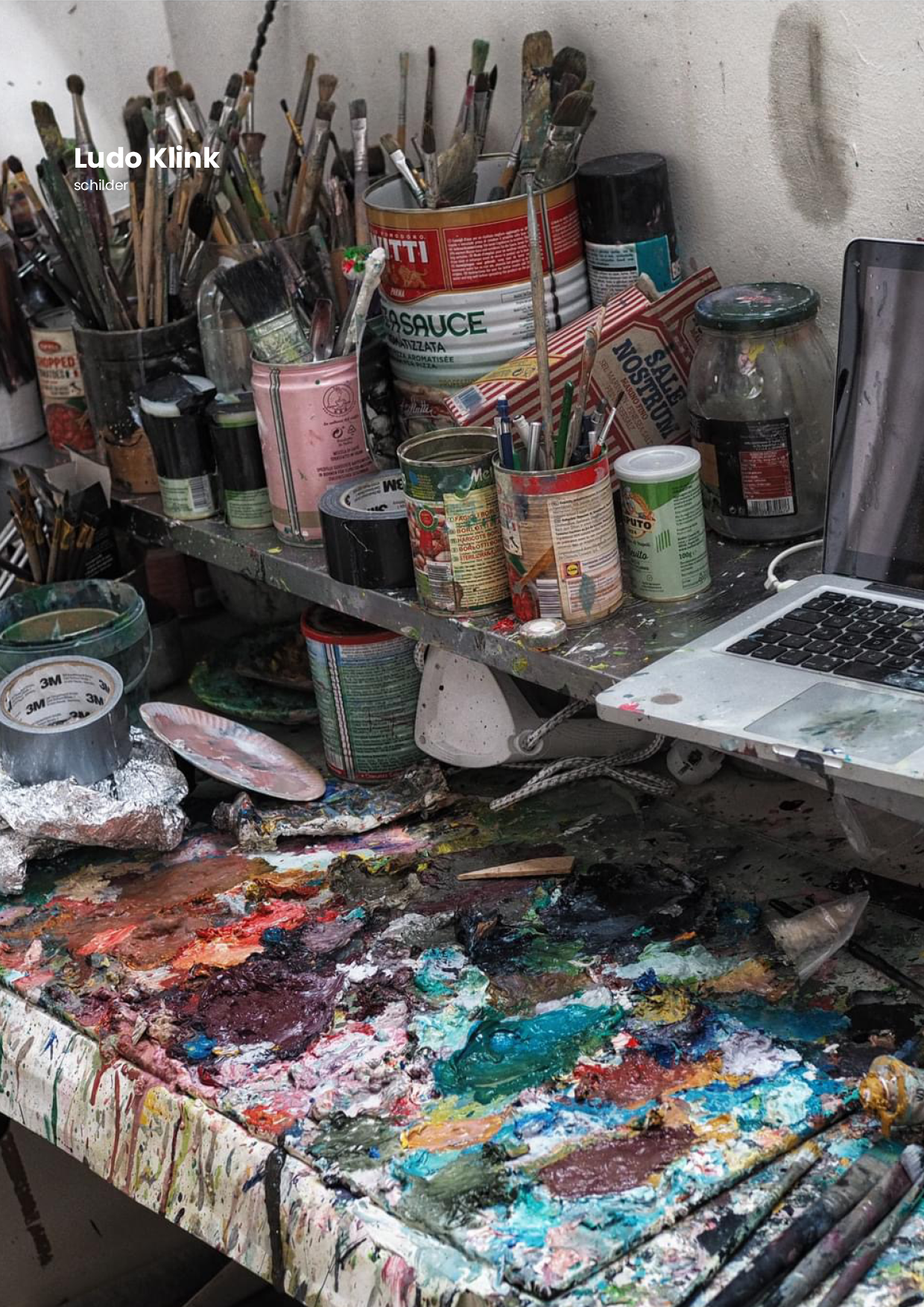
Hoewel ik soms in mijn hoofd een heel ander beeld heb, kan het in de praktijk volledig anders uitpakken zodra ik in contact kom met de materie: het doek, de verf, het spieraam, de ondergrond, het soort doek, de kwasten. Dan gaat het redelijk snel en werk ik in een hoog tempo. Dat kunnen vijf doeken per dag zijn, soms meer, soms minder.
Voor mij begint het dan pas. Het heroverwegen van het werk dat in korte tijd is ontstaan, is cruciaal. In de euforie van het maken en in de aantrekkingskracht van het spontane schuilt een gevaar. Dat mag nooit het doel zijn.
Ik maak veel gebruik van foto’s en Polaroids om tot een werk te komen. Dat geeft me een mate van rust die ik nodig heb. Ik kan dingen isoleren en daardoor gemakkelijker tot de kern komen.
It seems that my work is aimed at leaving a certain degree of doubt in the final result. I deliberately say ‘it seems’ and ‘my work aims to create doubt’, as if it comes about independently of me. In a way, it does. Whether that is actually the case is itself debatable, and I would even venture to doubt it. At least, that is how it seems to me. I genuinely have no idea how it comes across to the viewer.
That doubt is not actually there while I am working. I often can no longer remember or reconstruct how something came into being. When I look back at the process through which a work that ultimately remains has developed — many paintings are painted over, after all — I can no longer put my finger on exactly how it came about. I only know when something is right and when it is not.
In that sense, the process is more important than the final result. The final result only reveals whether I have worked conscientiously. Conscientiously in the sense of being careful, deliberate and attentive.
The impulse to make a new work comes purely from a great deal of curiosity. Experimentation occasionally produces something I can take further, but much more often it does not.
The consequence is a long process of adjusting, painting over, looking, and painting over again. I believe that experimenting, searching for something that does not yet exist, is the only truly useful aspect of making art. At least, that is how I see it in relation to painting. And I am speaking only for myself.
Although I sometimes have a completely different image in my mind, things can turn out entirely differently in practice as soon as I come into contact with the material: the canvas, the paint, the stretcher frame, the ground, the type of canvas, the brushes. Then things move fairly quickly and I work at a rapid pace. That can mean five canvases in a day, sometimes more, sometimes fewer.
For me, that is when it really begins. Reconsidering the work that has emerged in a short period of time is crucial. There is a danger in the euphoria of making and in the appeal of spontaneity. That can never be the goal.
I make extensive use of photographs and Polaroids as a way of arriving at a work. They give me a degree of calm that I need. They allow me to isolate things and, in doing so, to get closer to the essence.
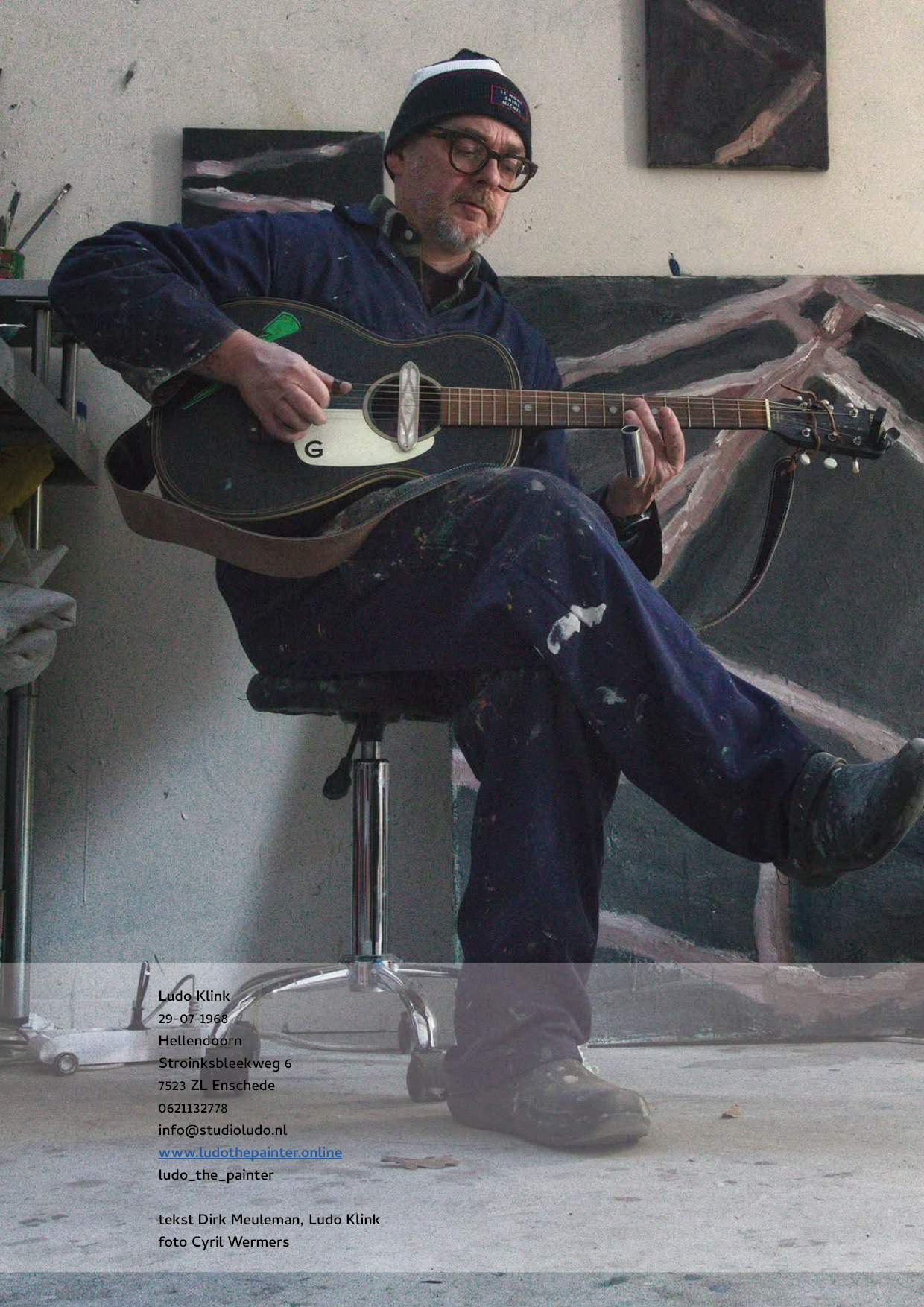
picture: Cyril wermers, 2025.